
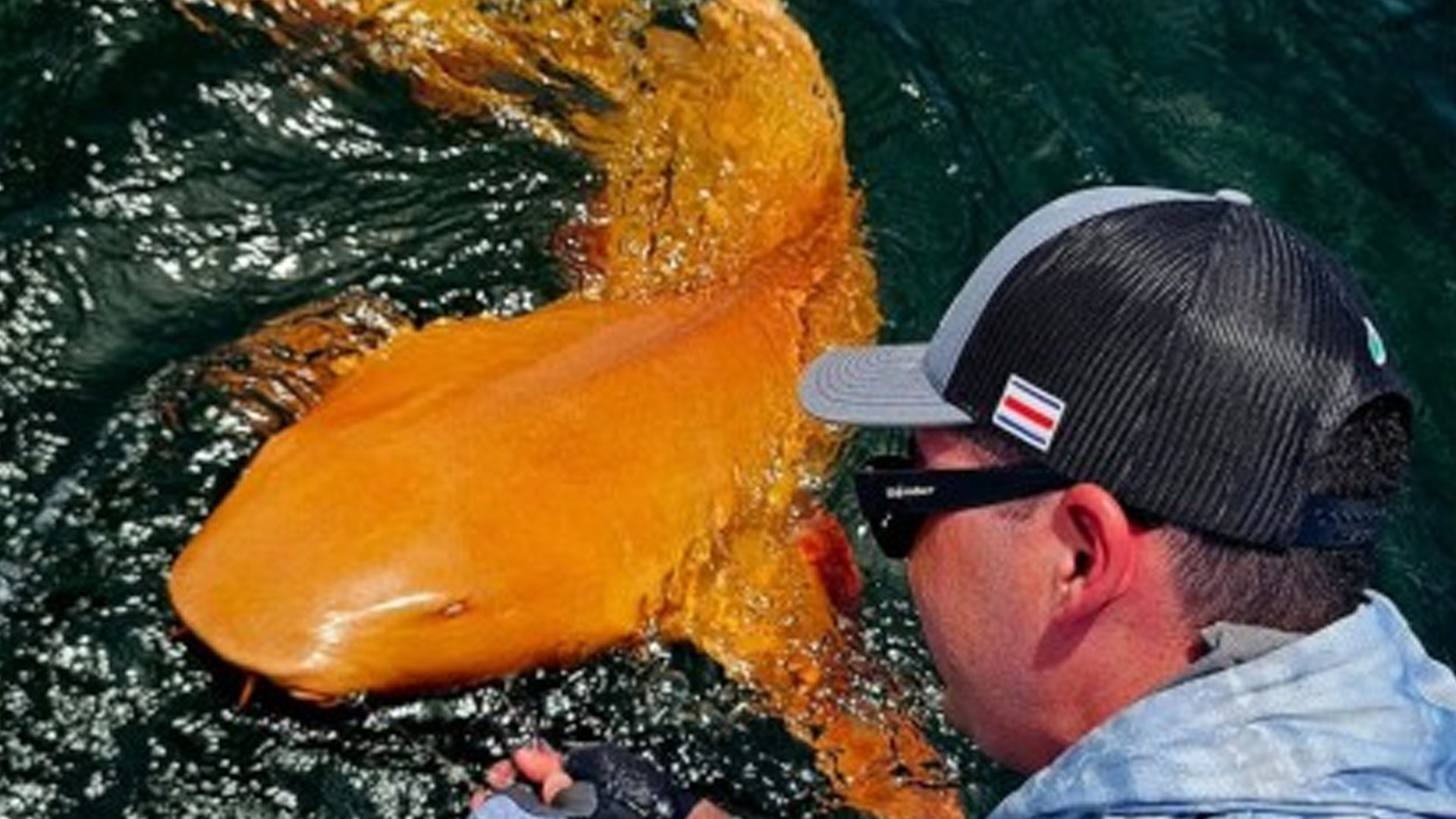








Researchers have confirmed the discovery of an extremely rare bright orange nurse shark with striking white eyes, off the coast of Costa Rica, a first-of-its-kind find in the Caribbean, according to the Independent.
The six-foot-long shark, caught during a sport fishing trip near Tortuguero National Park at a depth of 37 meters, is believed to have a pigmentation condition called xanthism or xanthochroism.
The rare anomaly produces excessive yellow or golden coloration in animals due to the absence of red pigmentation.
According to researchers of the Federal University of Rio Grande, this is the first recorded case of xanthism in cartilaginous fish – sharks, rays, and skates – in the region. The shark also displayed traits of albinism, most notably a pair of white eyes.
Ordinarily, nurse sharks have brown skin that allows them to blend with the seabed.
Scientists noted that the shark’s orange hue and pale eyes would make it more visible – and potentially more vulnerable – to predators.
The condition is usually caused by a genetic mutation, though diet and other environmental factors may also play a role. Scientists stressed the need for further research into the genetic makeup of local shark populations to determine the origins of the anomaly.
Xanthism is considered exceptionally rare across species, having been documented in only a few fish, reptiles, birds, and other animals. (PNA)